
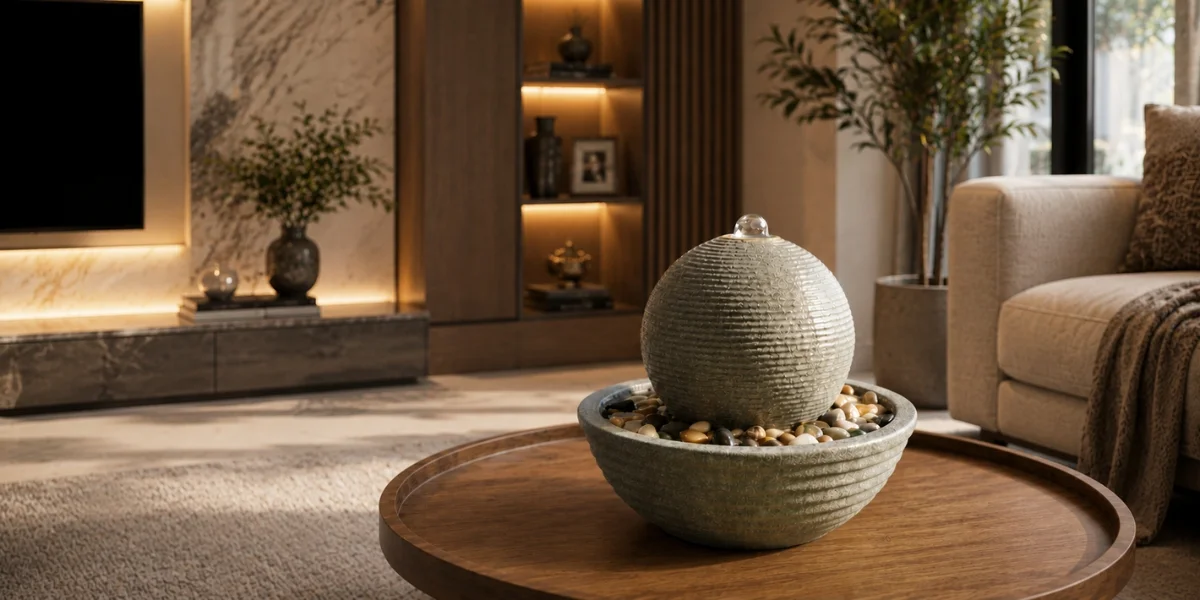
Tabletop Water Fountains
Tabletop water fountains are the perfect marriage of aesthetic appeal and sensory relaxation, designed to bring the soothing essence of nature into any interior setting. These compact decor pieces utilize a silent submersible pump to circulate water, creating a gentle trickling sound that masks intrusive background noise and promotes a sense of “blue mind” tranquility. Beyond their auditory benefits, they serve as functional art, acting as natural humidifiers that improve air quality while providing a sophisticated focal point for desks, consoles, or bedside tables.Popular Styles of Tabletop Fountains
The design landscape for tabletop fountains is incredibly diverse, ensuring a match for every interior personality. Zen-inspired stone arrangements and bamboo “shishi-odoshi” styles are perennial favorites for those seeking a meditative atmosphere, while modern minimalist designs utilize sleek slate, stainless steel, and geometric glass for a contemporary edge. For a more whimsical or rustic touch, many homeowners opt for tiered ceramic bowls or weathered resin sculptures that mimic natural waterfalls and woodland springs.Indoor Tabletop Water Fountain
Integrating an indoor fountain is a strategic move for enhancing the “vibe” of high-traffic living spaces or high-stress work environments. Because these units are self-contained and require no plumbing, they offer a low-maintenance way to introduce the element of water without the spatial demands of a full-scale pond. They are particularly effective in home offices to boost focus or in entryways to create an immediate sense of calm for guests, effectively bridging the gap between outdoor serenity and indoor comfort.Fountain Decor Ideas
To elevate your fountain’s visual impact, consider surrounding the base with natural elements like polished river stones, crystals, or succulent arrangements to create a miniature ecosystem. Lighting plays a crucial role as well; placing a fountain near a warm lamp or choosing a model with built-in LEDs can create mesmerizing reflections on the ceiling and walls. For a multisensory experience, some enthusiasts add a drop of water-soluble essential oils to the basin, turning the fountain into a subtle aromatic diffuser.Long-Lasting Fountain
Ensuring your fountain remains a centerpiece for years to come boils down to two factors: water quality and pump care. Using distilled water is the single best way to prevent mineral buildup and white scale, which can eventually clog the motor and dull the finish of the fountain. Regularly checking water levels to prevent the pump from running dry, along with a quick monthly deep clean of the basin and filter, will keep the flow consistent and the motor humming silently for a lifetime of relaxation.
In our fast-paced, digital world, finding a pocket of peace at home has become more than a luxury it’s a necessity. Enter the tabletop water fountain, a compact yet powerful decor element that brings the soothing essence of nature directly into your living space. Whether you’re looking to mask street noise or simply want to elevate your interior design, an indoor fountain is a versatile solution.
Why You Need an Indoor Tabletop Water Fountain

The appeal of indoor water features goes far beyond their aesthetic charm. They serve as functional tools for wellness and environment control.
1. Stress Reduction and Relaxation
The primary reason people invest in tabletop fountains is the auditory benefit. The sound of trickling water triggers a relaxation response in the brain, lowering cortisol levels. This phenomenon, often called “Blue Mind,” suggests that being near water can induce a meditative state.
2. Natural Humidification
Standard HVAC systems often strip the air of moisture, leading to dry skin and respiratory discomfort. A water fountain acts as a natural humidifier. As the water evaporates, it adds moisture back into the room, which is particularly beneficial for indoor plants and your own skin health during winter months.
3. Air Purification
Falling water creates negative ions. These ions bond with airborne pollutants like dust, pollen, and pet dander, causing them to fall out of the air. It’s like having a miniature air scrubber that doubles as a piece of art.
4. Masking Distractions
If you live in a noisy urban environment or work from home, a tabletop fountain provides perfect “white noise.” It can effectively drown out the hum of a refrigerator, distant traffic, or loud neighbors, allowing you to focus on your tasks.
Popular Styles of Tabletop Fountains
Choosing the right style is crucial for ensuring the fountain complements your existing furniture and architecture.
Zen and Buddhist-Inspired
These often feature Buddha statues, lotus blossoms, or stacked river stones. They are designed to evoke a sense of spiritual calm and are perfect for meditation corners or yoga rooms.
Modern Minimalist
Characterized by clean lines, geometric shapes (like spheres or cubes), and materials like stainless steel or slate. These fountains look stunning in contemporary offices or on sleek entryway consoles.
Tiered Traditional
The classic “waterfall” look. Water flows from one basin to another, usually made from resin finished to look like aged stone or terracotta. These provide a more robust sound compared to other styles.
Naturalistic / Rock Formations
Crafted to look like a miniature slice of a mountain stream. These often use LED lighting to highlight the water as it cascades over faux-stone ledges, making them a great choice for rustic or bohemian interiors.
Material Matters: What to Look For
The material of your fountain doesn’t just dictate the price; it affects the acoustic resonance, the weight on your furniture, and how much scrubbing you’ll be doing on the weekends.
1. Rotomoulded Fountains (Rotational Molded)
A modern favorite in the fountain world, rotomoulding involves a heated hollow mold that creates a seamless, stress-free plastic part. It is often finished to look exactly like stone or concrete but without the extreme weight.
2. Ceramic Fountains
Ceramic fountains are often handcrafted and glazed at high temperatures. These are perfect for those who want a “pop” of color or a glossy, artistic finish.
3. Slate and Natural Stone Fountains
For the ultimate authentic experience, nothing beats real stone. These fountains are heavy, grounded, and provide a deep, resonant sound as water splashes against the rock.
4. Other Materials (Resin & Metal)
Resin is the go-to for budget-friendly, intricate designs, while metals like copper offer a more melodic, chiming sound.
Comparison Table: Which Material is Right for You?
Material | Pros | Cons |
Rotomoulded | Virtually indestructible, UV-resistant, lightweight, and leak-proof | Limited to more matte or textured finishes; less "shiny." |
Ceramic | Elegant, easy to clean, available in vibrant colors. | Fragile; can crack if dropped or if the water freezes. |
Slate/Stone | Natural look, very durable, unique one-of-a-kind textures. | Extremely heavy; can develop mineral buildup quickly. |
Resin / Metal | Lightweight and affordable (Resin); unique patina and chime (Metal). | Resin can feel "cheap" if thin; Metal requires polishing. |
Fountain Decor Ideas: Where to Place Your Fountain
Strategic placement can maximize both the visual impact and the feng shui of your home.
The Home Office
Place a small fountain on your desk, but away from your laptop. The sound will help maintain “deep work” focus and prevent burnout during long Zoom marathons.
The Entryway
Set the tone for your home the moment guests walk in. A fountain on a foyer table signals that your home is a sanctuary of peace. In Feng Shui, moving water near the entrance is also believed to invite wealth and positive energy.
The Bedroom Nightstand
A low-flow, quiet fountain can be a superior alternative to a white noise machine. Look for models with an adjustable pump so you can set the “drip” to a level that helps you drift off without being too loud.
The Living Room Mantle
Use a fountain as a centerpiece. Flank it with indoor greenery like Pothos or Snake Plants; the fountain provides the moisture the plants crave, creating a mini-ecosystem in your living room.
Maintenance Tips for a Long-Lasting Fountain
To keep your fountain crystal clear and quiet, follow these simple rules:
1. Use Distilled Water:
Tap water contains minerals that create white scale buildup and can eventually clog the pump. Distilled water keeps the system pristine.
Tap water contains minerals that create white scale buildup and can eventually clog the pump. Distilled water keeps the system pristine.
2. Keep it Full:
Never let the pump run dry. If you hear a “gurgling” or “sucking” sound, your water level is too low.
Never let the pump run dry. If you hear a “gurgling” or “sucking” sound, your water level is too low.
3. Monthly Cleaning:
Once a month, take the fountain apart and wipe down the surfaces with a mild soap and water solution. Use a small brush to clean the pump intake.
Once a month, take the fountain apart and wipe down the surfaces with a mild soap and water solution. Use a small brush to clean the pump intake.
4. Algae Prevention:
If your fountain is near a window, sunlight can trigger algae growth. Add a drop of fountain-safe algaecide once a week to keep the water clear.
If your fountain is near a window, sunlight can trigger algae growth. Add a drop of fountain-safe algaecide once a week to keep the water clear.
Conclusion
A tabletop water fountain is more than just a decor trend; it’s a functional investment in your mental well-being. By choosing a style that reflects your personality and maintaining it with distilled water, you can transform any room into a serene retreat. Whether it’s the sleek chime of a metal fountain or the earthy babble of a stone waterfall, the right water feature is waiting to bring your home to life.
FAQ's
Most fountains have an adjustable pump. You can choose between a faint trickle and a more vigorous splash. The motor itself should be nearly silent if the water level is maintained correctly.
Yes, most high-quality fountain pumps are designed to run continuously. In fact, it is often better for the pump to stay running than to be constantly toggled on and off.
No. Insects are attracted to stagnant water. Because the water in a fountain is constantly moving and filtered, it is not a breeding ground for mosquitoes or other pests.
Tabletop water fountains operate using a small, submersible electric pump hidden within a reservoir basin. The pump pushes water through a tube to the top of the fountain structure, where gravity allows it to flow back down over stones or tiers. This creates a continuous, self-contained cycle that requires no external plumbing only a standard electrical outlet or batteries.
No, most tabletop fountains are extremely energy-efficient. Because the pumps are small and only need to move a low volume of water, they typically consume between 2 to 5 watts of power. Running a fountain 24/7 usually costs less than a few cents per day, making it a cost-effective addition to home or office decor.
For optimal hygiene and performance, you should change the water every 1 to 2 weeks. Over time, water evaporates and can leave behind dust or pet dander. To prevent algae growth and pump strain, it is best to empty the basin, wipe it down, and refill it with fresh distilled water to avoid mineral buildup.
Yes, most fountains are designed for continuous operation. Many people leave them on at night to use the “white noise” of the trickling water as a sleep aid. However, you must ensure the water level remains high enough to keep the pump fully submerged; if the water evaporates and the pump runs dry, it can overheat and burn out.
A loud humming or grinding sound usually indicates one of three things:
- Low Water Level: The pump is sucking in air (the most common cause).
- Vibration: The pump is touching the side or bottom of the basin; try adjusting its position.
- Debris: Small particles may be trapped in the pump impeller, requiring a quick rinse.
The primary benefits include stress reduction through soothing soundscapes, natural humidification of dry indoor air, and the improvement of Feng Shui by inviting flowing energy into a space. They also serve as functional decor that can mask distracting background noises in offices or apartments.