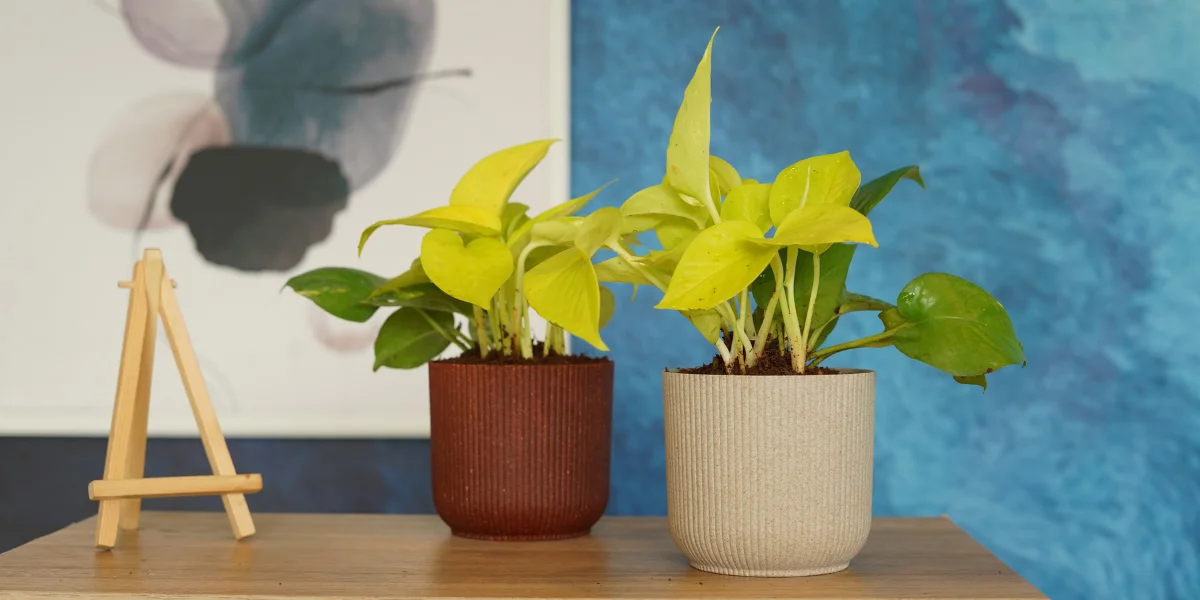
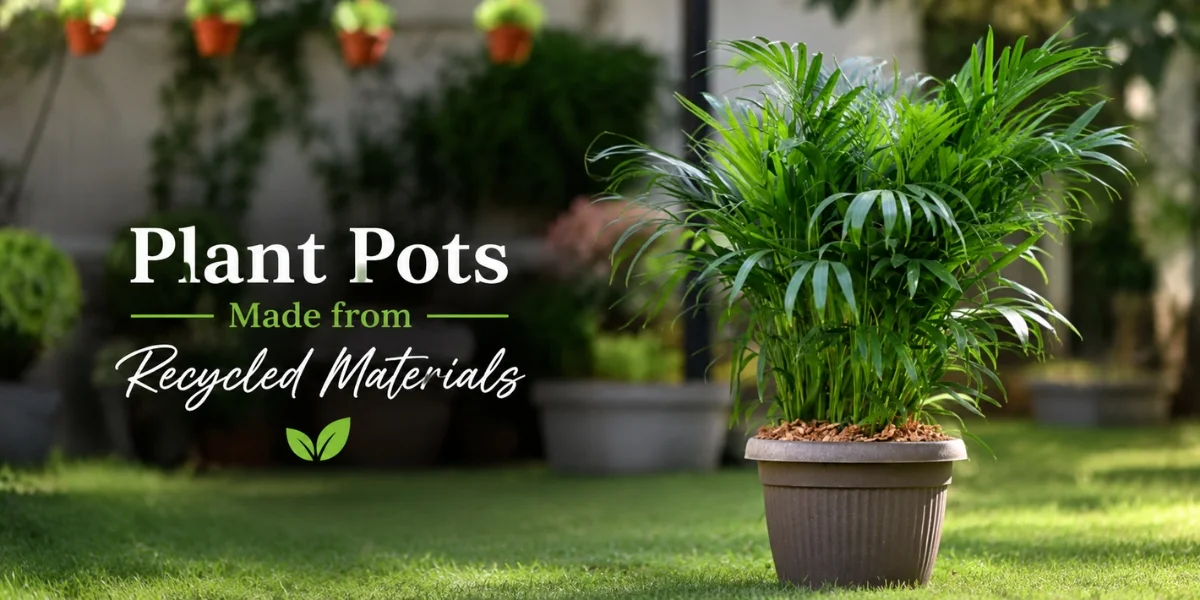
Waste Material Plant Pot
Creating a waste material plant pot is the perfect intersection of environmental responsibility and interior design. Instead of purchasing mass-produced plastic, you can repurpose everyday items like tin cans, glass jars, or old containers into unique vessels for your greenery. This approach not only saves money but also significantly reduces your household carbon footprint. By transforming “trash” into treasure, you ensure that your gardening hobby supports a circular economy while giving your favorite indoor plants a truly one-of-a-kind home.Sustainable Home Decor Ideas
Integrating Sustainable Home Decor Ideas into your living environment is about more than just aesthetics; it is about choosing longevity over disposability. Upcycled planters serve as a focal point that tells a story of conscious living. You can unify mismatched recycled containers by using organic mineral paints or natural jute twine wrapping. These small, intentional changes elevate a room’s atmosphere, proving that high-end style can be achieved through resourcefulness and a deep respect for our planet’s finite resources.Eco Friendly Pots for Plants
When selecting Eco Friendly Pots for Plants, it is vital to consider both the material’s durability and its impact on plant health. Natural materials or repurposed food-grade plastics make excellent choices because they don’t leach harmful chemicals into the soil. These sustainable options provide excellent insulation for roots and can be easily customized to fit any design theme, from rustic farmhouse to modern industrial. Transitioning to earth-friendly vessels ensures your indoor jungle thrives in harmony with the natural world outside.Plant Pots with Waste Material
Designing Plant Pots with Waste Material allows for limitless creativity that you simply can’t find in a big-box store. From vintage tea tins to discarded wooden crates, the possibilities are endless. The key to success lies in preparation: always ensure you provide adequate drainage and a clean surface for decoration. Whether you prefer a minimalist look or a vibrant, hand-painted finish, using waste materials ensures that no two planters in your collection will ever be exactly the same.Recycled Pots
Switching to Recycled Pots offers a practical solution for the budget-conscious gardener looking to scale their collection. These containers are often more durable than thin, store-bought plastic liners and offer a second life to high-quality materials like thick HDPE or aluminum. Beyond the cost savings, using recycled vessels minimizes the demand for new manufacturing, which consumes vast amounts of water and energy. It is a simple, effective way to practice daily conservation while maintaining a lush, beautiful home garden.Eco Friendly Planters
Making the move to eco friendly planters is a powerful statement against the culture of convenience. As more plant enthusiasts recognize the environmental toll of traditional gardening supplies, these sustainable alternatives have become the gold standard for modern hobbyists. They offer a guilt-free way to enjoy nature indoors, ensuring that your passion for plants doesn’t come at the cost of the environment. Embrace the beauty of upcycling and let your home reflect a commitment to a greener, cleaner, and more stylish future.
In an era where “reduce, reuse, and recycle” has transitioned from a catchy slogan to a lifestyle necessity, our homes are becoming the front lines of environmental change. One of the most rewarding ways to embrace this shift is through indoor gardening. However, as any plant parent knows, the cost of high-end pots for plants can quickly outgrow your budget.
Enter the waste material plant pot. By reimagining everyday items that would otherwise head to a landfill, you can create a bespoke indoor jungle using plant pots with waste material. This guide explores how to turn “trash” into botanical treasure, ensuring your home decor pots remain both stylish and sustainable.
The Importance of Eco Friendly Products in Modern Decor
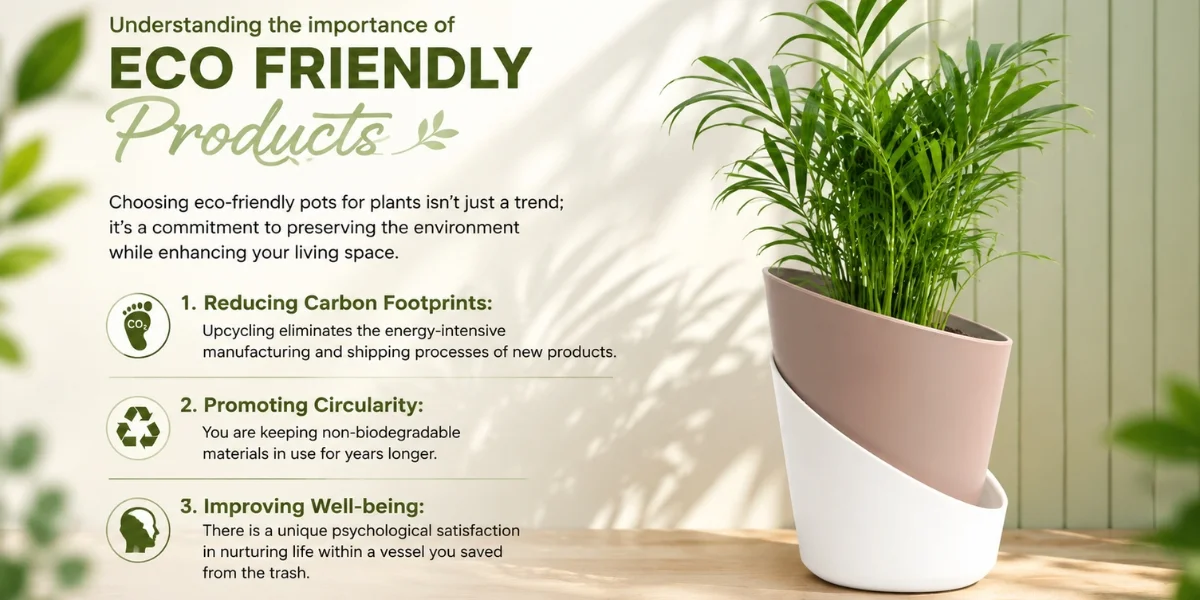
Understanding the importance of eco friendly products is the first step toward a more conscious home. Traditional plastic pots contribute significantly to global waste, often ending up in oceans or landfills. By opting for eco friendly planters, you are:
1. Reducing Carbon Footprints:
Upcycling eliminates the energy-intensive manufacturing and shipping processes of new products.
Upcycling eliminates the energy-intensive manufacturing and shipping processes of new products.
2. Promoting Circularity:
You are keeping non-biodegradable materials in use for years longer.
You are keeping non-biodegradable materials in use for years longer.
3. Improving Well-being:
There is a unique psychological satisfaction in nurturing life within a vessel you saved from the trash.
There is a unique psychological satisfaction in nurturing life within a vessel you saved from the trash.
Choosing eco-friendly pots for plants isn’t just a trend; it’s a commitment to preserving the environment while enhancing your living space.
Stylish & Sustainable Home Decor Ideas
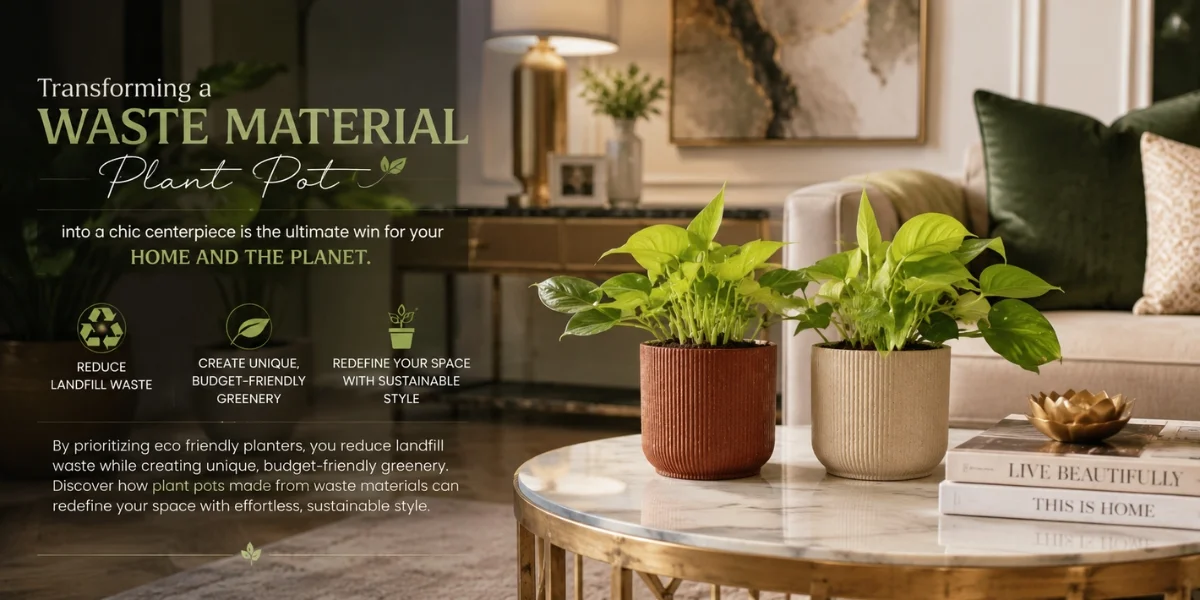
Transforming a waste material plant pot into a chic centerpiece is the ultimate win for your home and the planet. By prioritizing eco friendly planters, you reduce landfill waste while creating unique, budget-friendly greenery. Discover how plant pots made from waste materials can redefine your space with effortless, sustainable style.
Kitchen Upcycling: Turning Packaging into Indoor Planters
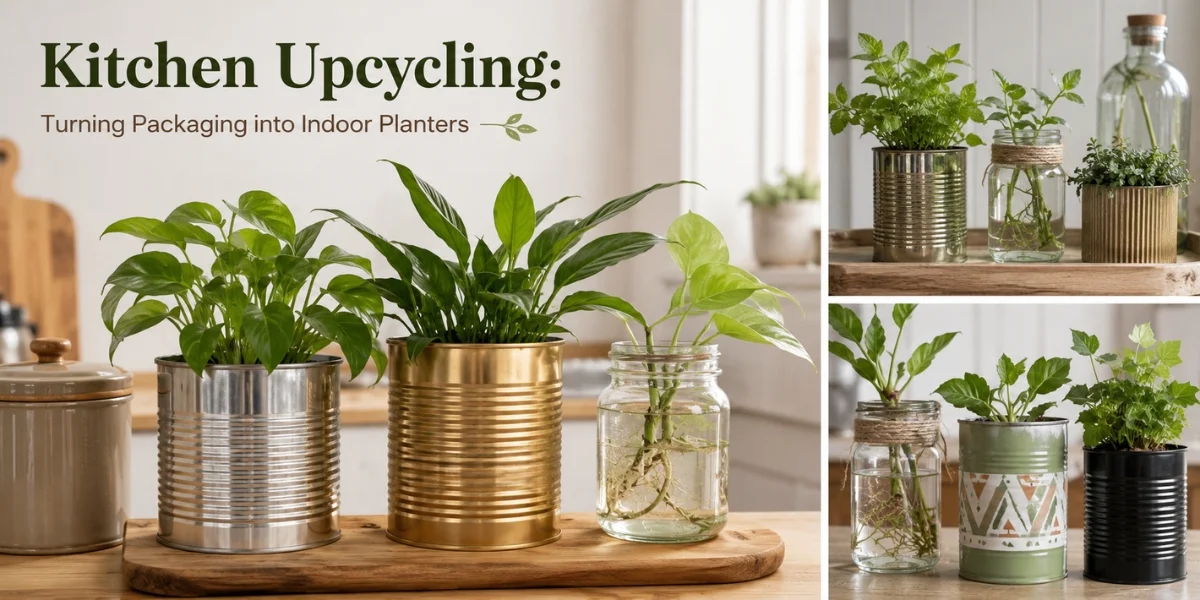
The kitchen is a goldmine for anyone looking to create a waste material plant pot. Most food packaging is designed to be airtight and water-resistant, making it a perfect foundation for indoor planters.
Vintage Tin Cans
Old tomato paste cans, tea tins, or large coffee canisters provide an industrial-chic vibe.
1. The Look:
Leave them as-is for a rustic feel, or spray paint them in matte black or metallic gold.
Leave them as-is for a rustic feel, or spray paint them in matte black or metallic gold.
2. The Benefit:
Metal is durable and provides a sturdy base for top-heavy plants.
Metal is durable and provides a sturdy base for top-heavy plants.
Glass Jars & Bottles
Pasta sauce jars and glass milk bottles are perfect pots for plants that thrive in water, like Pothos or Lucky Bamboo.
1. The Look:
Wrap the rim in twine or use glass paint to create faux-ceramic patterns.
Wrap the rim in twine or use glass paint to create faux-ceramic patterns.
2. Pro Tip:
Since you can’t easily drill glass, use these primarily for water propagation or as decorative “cache pots” for smaller plastic liners.
Since you can’t easily drill glass, use these primarily for water propagation or as decorative “cache pots” for smaller plastic liners.
Plastic Reimagined: Stylish Eco Friendly Planters
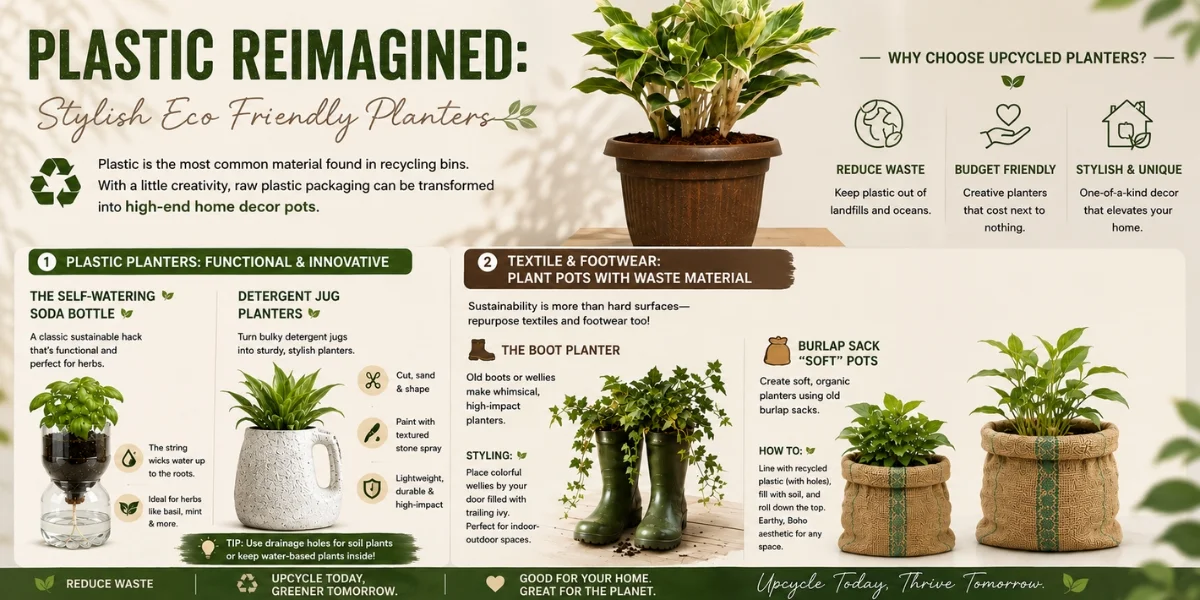
Plastic is the most common material found in recycling bins. While raw plastic packaging might look unappealing, it can be transformed into high-end home decor pots with a little creativity.
The Self-Watering Soda Bottle
This is a classic sustainable hack for eco-friendly pots for plants. Cut a 2-liter bottle in half. Flip the top part upside down into the bottom base. Thread a piece of cotton string through the cap into the water below.
• Why it works:
The string wicks water up to the roots, making it one of the most functional indoor planters for herbs like basil or mint.
The string wicks water up to the roots, making it one of the most functional indoor planters for herbs like basil or mint.
Detergent Jug Planters
Large laundry detergent jugs are made of thick, durable HDPE plastic.
• The Project:
Cut the top off, sand the edges, and paint the exterior with textured “stone” spray paint. You’ll end up with a sturdy, large-scale waste material plant pot that looks like heavy concrete but weighs almost nothing.
Cut the top off, sand the edges, and paint the exterior with textured “stone” spray paint. You’ll end up with a sturdy, large-scale waste material plant pot that looks like heavy concrete but weighs almost nothing.
Textile & Footwear: Plant Pots with Waste Material
Sustainability isn’t just about hard surfaces; it’s about textures too. Plant pots made from recycled materials can include old fabrics and even discarded footwear.
The Boot Planter
Do you have old rain boots or leather work boots that are too worn to donate? They make whimsical, high-impact garden features.
• Styling:
Place a pair of colorful wellies by your front door filled with trailing ivy. They serve as excellent eco friendly planters for outdoor-indoor transitional spaces.
Place a pair of colorful wellies by your front door filled with trailing ivy. They serve as excellent eco friendly planters for outdoor-indoor transitional spaces.
Burlap Sack "Soft" Pots
If you have coffee bean sacks or old burlap, you can create “soft pots.”
• How to:
Line the burlap with a recycled plastic bag (with holes), fill with soil, and roll down the top. It creates an organic, earthy aesthetic for your indoor planters that fits perfectly with Boho decor.
Line the burlap with a recycled plastic bag (with holes), fill with soil, and roll down the top. It creates an organic, earthy aesthetic for your indoor planters that fits perfectly with Boho decor.
Step-by-Step: Prepping Your Waste Material Plant Pot
To ensure your greenery thrives in plant pots with waste material, follow this essential preparation checklist:
Step | Action | Why it Matters |
Clean | Wash with warm soapy water. | Removes salt, sugar, or chemicals that harm plants. |
Drain | Drill or punch at least 3 holes. | Prevents root rot the #1 killer of indoor plants. |
Smooth | Sand down sharp edges (metal/plastic). | Safety for your hands and the plant's delicate leaves. |
Style | Apply paint, twine, or fabric. | Transition the item from "trash" to home decor pots. |
Styling Tips: Making Recycled Pots Look Expensive
The biggest fear with using a waste material plant pot is that the house might look cluttered. Here is how to keep your eco friendly planters looking professional:
1. Unify with Color:
If you have five different types of containers (a tin, a jar, a plastic tub), paint them all the same shade. A monochromatic palette makes an eclectic collection look like a curated set of indoor planters.
If you have five different types of containers (a tin, a jar, a plastic tub), paint them all the same shade. A monochromatic palette makes an eclectic collection look like a curated set of indoor planters.
2. Add Texture:
Use “stone” or “terracotta” spray paints. These add a gritty texture that hides the fact that the base material is a plastic yogurt container.
Use “stone” or “terracotta” spray paints. These add a gritty texture that hides the fact that the base material is a plastic yogurt container.
3. Elevate Them:
Place your plant pots made from recycled materials on wooden stands or small stacks of books. Adding height immediately gives an item “designer” status.
Place your plant pots made from recycled materials on wooden stands or small stacks of books. Adding height immediately gives an item “designer” status.
Why "Waste Material Plant Pot" is the Future of Gardening
As we look toward the future, the importance of eco friendly products will only grow. By choosing a waste material plant pot, you are participating in a global movement to reduce plastic waste. These eco friendly pots for plants allow for:
1. Unlimited Customization:
You are the designer.
You are the designer.
2. Affordable Scaling:
You can grow your plant collection without spending hundreds on pots for plants.
You can grow your plant collection without spending hundreds on pots for plants.
3. Educational Value:
It’s a great way to teach children about the environment and the lifecycle of materials.
It’s a great way to teach children about the environment and the lifecycle of materials.
Conclusion: Sustainable Beauty for Every Room
Transforming plant pots with waste material is more than just a weekend craft; it’s a statement about how we view the world. When we stop seeing objects as “disposable” and start seeing them as “adaptable,” we move closer to a circular economy.
Whether it’s a sleek black coffee tin holding a snake plant or an old boot overflowing with ferns, your recycled garden is a testament to your creativity. Before you take out the recycling this week, take a second look your next favorite indoor planters might be sitting right on top of the bin.
FAQ's
Yes! While plastic is lightweight, plant pots made from recycled materials reduce the need for new plastic production and prevent existing waste from entering ecosystems.
For plastic and metal, use a power drill or a hammer and nail to create at least three holes at the bottom. For glass, use a layer of charcoal and pebbles at the base to help manage excess water.
Succulents, herbs, and air plants are perfect for small home decor pots made from recycled jars or tins because they have smaller root systems.
Waste material plant pots are sustainable containers created by repurposing everyday items that would otherwise end up in landfills. Common examples include using old plastic bottles, tin cans, cracked ceramic mugs, wooden crates, or even worn-out tires as functional planters. This practice, known as upcycling, reduces environmental waste while providing a low-cost solution for home gardening.
To make a DIY planter, start by thoroughly cleaning a discarded container like a large yogurt tub or a glass jar. The most critical step is to drill or punch drainage holes in the bottom to prevent root rot. You can enhance the aesthetic by wrapping the exterior in jute twine, painting it with non-toxic acrylics, or covering it with fabric scraps to match your interior decor.
Yes, recycled pots are excellent for plants, provided they are made from food-safe materials and have proper drainage. Using recycled plastic or metal containers is highly effective because these materials are durable and moisture-retentive. However, if using old tires or treated wood, it is best to grow ornamental plants rather than edible herbs to avoid any potential chemical leaching into the soil.
The most eco-friendly pots are those made from biodegradable materials like coconut coir, rice husks, or compressed cow dung, as well as 100% recyclable FRP (Fiberglass) or high-grade recycled plastics. These options minimize the carbon footprint of your garden because they either break down naturally in the soil or can be re-processed into new products at the end of their lifespan.