Indoor Plants in Balcony

Transforming your balcony into a lush sanctuary is the ultimate way to blend modern apartment living with the tranquility of nature. By bringing indoor plants out into this semi-shaded transition zone, you create a vibrant “outdoor room” that filters urban noise, purifies the surrounding air, and offers a private escape from the digital world. Whether you have a compact Juliet balcony or an expansive terrace, integrating diverse greenery turns a cold concrete space into a breathing, organic extension of your home’s interior design.

Why Grow Indoor Plants on Your Balcony

Moving your indoor plant collection to the balcony offers a unique environmental advantage, providing the natural light and air circulation that many tropical species crave but often lack inside. This increased exposure to indirect sunlight encourages faster growth, more resilient foliage, and even seasonal flowering that might not occur in a dim living room. Beyond the biological benefits for the plants, a balcony garden serves as a natural cooling system for your home and provides a proven psychological boost, reducing daily stress through the simple, mindful act of urban gardening.

Best Plants for Balcony Gardens

Choosing the right species is essential for a thriving balcony, and many classic indoor favorites perform exceptionally well in this setting. Snake Plants and ZZ Plants are nearly indestructible choices for low-maintenance greenery, while Areca Palms and Monstera Deliciosa add a dramatic, tropical flair with their large, architectural leaves. For those looking to add color and texture, Money Plants (Pothos) are perfect for trailing over railings, and Peace Lilies offer elegant white blooms that thrive in the dappled shade typical of most apartment balconies.

Creative Styling Tips for a Modern Balcony

To achieve a contemporary look, focus on vertical interest and cohesive container choices to maximize your footprint. Use tiered plant stands or wall-mounted modular planters to create a “living wall” that draws the eye upward, making a small balcony feel significantly larger. Mix and match premium planters in neutral tones like charcoal, terracotta, or matte white—to create a sophisticated palette that complements your furniture. Adding a few weather-resistant floor cushions, a small outdoor rug, and some warm string lights will complete the transformation from a simple utility space to a high-end relaxation zone.

Vastu Shastra Guide for Balcony Plants

Incorporating Vastu Shastra principles into your balcony garden can harmonize the energy flow and bring positivity to your household. According to traditional wisdom, it is best to place smaller, flowering plants in the North or East sectors to attract prosperity and morning sunlight. Avoid keeping thorny cacti or large, heavy trees in the North-East, as these can block positive vibrations. Instead, prioritize auspicious greenery like the Tulsi (Holy Basil) plant in the East or North, which is believed to purify the environment and protect the home from negative energy.

Maintenance: Keeping Your Balcony Jungle Alive

Maintaining a thriving balcony garden requires a slightly different approach than indoor care due to increased exposure to the elements. Watering schedules should be adjusted based on wind and sun exposure, as balcony plants often dry out faster than those kept inside. Regularly dusting the leaves with a damp cloth is vital for photosynthesis, especially in urban areas where city dust can accumulate quickly. Ensure your planters have excellent drainage to prevent root rot during monsoon seasons, and periodically rotate your pots to ensure every side of your “balcony jungle” receives an equal share of life-giving light.
Indoor Plants In Balcony, Grow Indoor Plants, Plants For Balcony Gardens, Modern Balcony, Balcony Plants, Harshdeep India

Indoor Plants in Balcony: Best Plants, Styling Tips & Vastu Guide

Indoor Plants in Balcony: Best Plants, Styling Tips & Vastu Guide

Growing a garden in a limited space is one of the most rewarding ways to bring life into an urban home. Whether you have a tiny Juliet balcony or a sprawling terrace, indoor plants can bridge the gap between your living room and the outdoors.
This guide explores the best plant selections, creative styling techniques, and Vastu principles to ensure your balcony remains a sanctuary of health, wealth, and greenery.

Why Grow Indoor Plants on Your Balcony?

Indoor Plants In Balcony, Grow Indoor Plants, Plants For Balcony Gardens, Modern Balcony, Balcony Plants, Harshdeep India
While we call them “indoor plants,” most of these species are tropical understory plants that actually thrive in the filtered light of a balcony. Placing them here offers:
1. Improved Air Quality:
Plants like Snake Plants and Areca Palms act as natural filters for urban pollutants.
2. Natural Cooling:
A dense collection of plants can lower the temperature of your balcony by a few degrees through transpiration.
3. Stress Reduction:
The “biophilia” effect helps lower cortisol levels and boosts mood.

Best Plants for Balcony Gardens (Categorized by Light)

Indoor Plants In Balcony, Grow Indoor Plants, Plants For Balcony Gardens, Modern Balcony, Balcony Plants, Harshdeep India
The success of your balcony garden depends entirely on one factor: Light. Before buying, observe where the sun hits and for how long.

1. Low-Light / North-Facing Balconies

If your balcony is shaded by other buildings or faces North, choose “low-light” champions.
1. Snake Plant (Sansevieria):
Indestructible and thrives on neglect.
2. ZZ Plant:
Known for its waxy, deep green leaves that reflect light.
3. Peace Lily:
Adds a touch of elegance with its white spathes (flowers).

2. Bright, Indirect Light / East & West Facing

These balconies get a few hours of mild sun.
1. Areca Palm:
Creates a lush, tropical “screen” for privacy.
2. Money Plant (Pothos):
The ultimate climber or trailer.
3. Spider Plant:
Great for hanging baskets; produces “babies” that dangle beautifully.

3. Direct Sun / South-Facing Balconies

South-facing spots get intense heat. You need rugged plants.
1. Aloe Vera:
Functional, medicinal, and sun-loving.
2. Jade Plant:
A succulent that symbolizes prosperity.
3. Rubber Plant:
Needs bright light to maintain its dark, moody foliage.

Creative Styling Tips for a Modern Balcony

Indoor Plants In Balcony, Grow Indoor Plants, Plants For Balcony Gardens, Modern Balcony, Balcony Plants, Harshdeep India
Transforming a cluttered collection of pots into a “styled” space requires a bit of design thinking.

1. Embrace Vertical Gardening

When floor space is limited, look up.
1. Wall Planters:
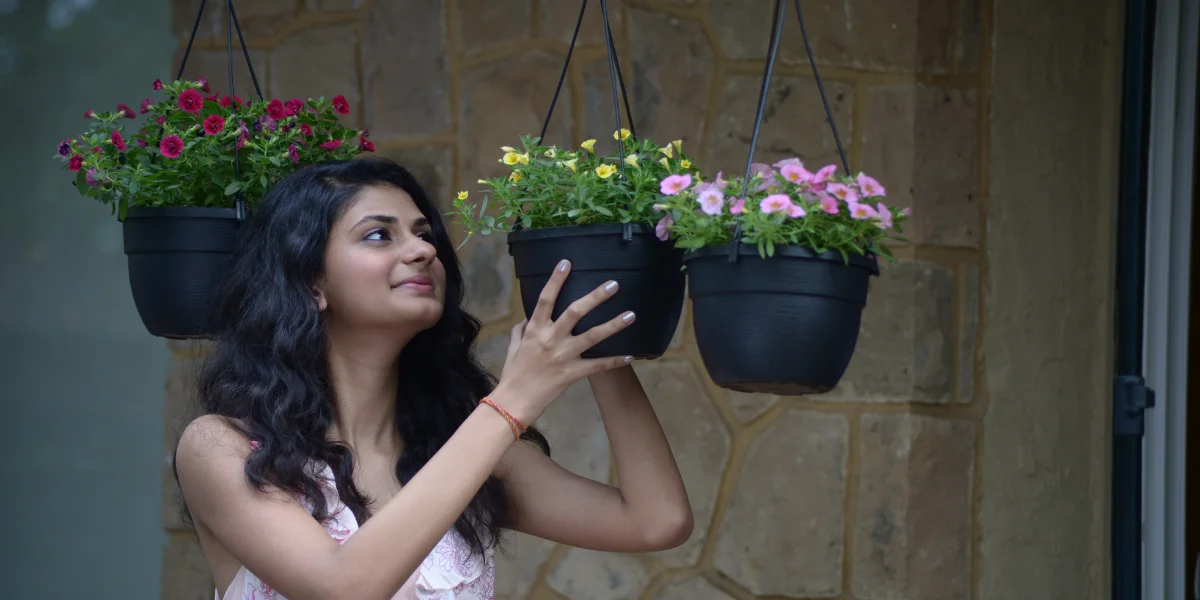
Use a wooden trellis or a metal grid to hang small pots.
2. Railings:
Use “saddle” pots that sit directly on the balcony railing to save floor space.
3.Tiered Stands:
A 3-tier plant stand creates a “staircase” of greenery.

2. The "Rule of Three"

For a professional look, group plants in threes. Mix their heights: one tall (focal point), one medium (filler), and one trailing (spiller).

3. Mix and Match Textures

Combine the broad, dramatic leaves of a Monstera Deliciosa with the fine, feathery fronds of a Boston Fern. This contrast makes the space feel more curated and less accidental.

4. Use Cohesive Potting

While eclectic pots have charm, using a consistent color palette (like all terracotta, all white, or all stone-grey) makes a small balcony feel larger and more organized.

Vastu Shastra Guide for Balcony Plants

According to Vastu, plants do more than just look good; they direct the flow of Prana (life energy) through your home.

The Best Directions

1. North & East:
These are the most auspicious directions. Use smaller plants here to allow the morning sunlight to enter the home freely.
2. South & West:
If your balcony is in these directions, go for larger, heavier plants. Vastu suggests that “heavy” energy in the South/West protects the home from negativity.

Essential Vastu Plants

1. Tulsi (Holy Basil):
Ideally placed in the North or East. It is considered a powerhouse of positive energy and medicinal value.
2. Money Plant:
Placing this in the South-East corner is said to attract financial prosperity.
3. Bamboo:
A symbol of good luck and longevity.

Vastu "Don'ts"

1. Avoid Thorny Plants:
Except for Roses and Cacti (which some experts suggest keeping outside), thorny plants are generally avoided as they are said to create “sharp” energy.
2. Remove Dying Plants:
Withered leaves or dying plants represent stagnant energy. Always prune or replace them promptly.
3. No Milk-Exuding Plants:
Plants that bleed a white, milky sap when cut are often discouraged inside or near the main entrance.

Maintenance: Keeping Your Balcony Jungle Alive

Balcony plants face different challenges than indoor plants, mainly wind and faster evaporation.

Feature

Tip

Watering

Check the soil daily. Balcony pots dry out faster due to wind.

Drainage

Ensure every pot has a hole. Use saucers to prevent muddy water from dripping onto neighbors' balconies.

Wind Protection

Place fragile plants (like Calatheas) in corners where the walls provide a windbreak.

Fertilizing

During the growing season (Spring/Summer), feed your plants every 15 days with a liquid seaweed fertilizer.

Final Thoughts

Your balcony is an extension of your personality. By choosing the right plants based on light, styling them with vertical elements, and following basic Vastu principles, you create more than just a garden you create a retreat. Start with two or three “easy” plants like the Snake Plant or Pothos, and watch your urban sanctuary grow.

FAQ's

The best indoor plants for a balcony include the Snake Plant (low light), Areca Palm (privacy), Money Plant (climbing), and Jade Plant (sunny spots). Always match the plant to the direction your balcony faces.

Most indoor plants prefer “bright indirect light.” However, succulents like Aloe Vera, Jade, and hardy species like the Rubber Plant or Bougainvillea can handle direct sunlight if acclimated slowly.

According to Vastu, the Tulsi (Holy Basil) is the best plant for North/East balconies, while the Money Plant is recommended for the South-East to attract wealth.

The best indoor plants for a sun-drenched balcony are those that can handle high light intensity and heat. Snake Plants (Sansevieria) and Dracaena are excellent choices as they are incredibly hardy. Succulents, Cacti, and Jade plants also thrive in direct sunlight and require minimal watering, making them perfect for south-facing balconies.

Yes, you can keep low-light plants like Peace Lilies, Ferns, and Calatheas on a balcony, but they must be placed in a fully shaded area. Direct afternoon sun will scorch their delicate leaves. A North-facing balcony or a spot tucked behind larger, sun-tolerant plants is ideal for these shade-loving varieties.

Balcony plants generally need more frequent watering than those kept inside. Because they are exposed to wind and higher temperatures, the soil evaporates moisture much faster. During summer, you may need to water your balcony garden daily or every other day, whereas indoor plants might only need water once a week.

To protect your plants from wind damage, place heavier pots (ceramic or terracotta) at the base to prevent tipping. Use grouping techniques where taller, sturdier plants like Palms act as a windbreak for smaller, fragile ones. Additionally, installing a bamboo screen or trellis can diffuse high-speed winds while still allowing for essential air circulation.